
Mid America Middle Assembly Structure (MAMA)
Continue scrolling to read structure explanation.
Networks
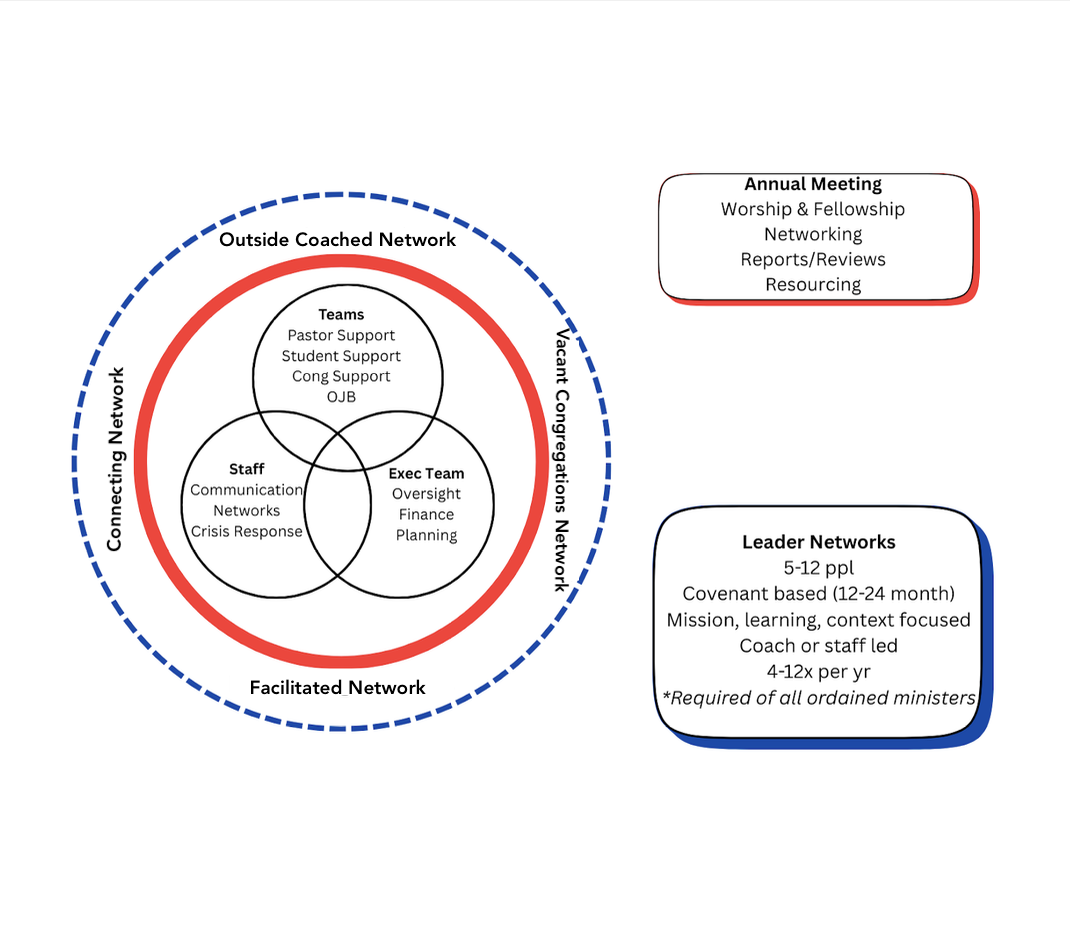
Covenant-based and meet for a 12-24 month period. These networks are mission-, learning-, and context-focused, facilitated groups. Networks meet between 4-12 times a year and are made up of 5-12 people.
*All Ministers of Word and Sacrament will be required to be in a network, but will self-select into networks that meet at a frequency that works, as well as engage at a level that is desired by the minister. Other leaders within the bounds of the Middle Assembly have access to and are invited to participate in a Network. Vacant congregations will be a part of the Transitional Leaders Network.
Annual Meeting — Family Reunion
Meeting annually in person, this will be a time of worship, fellowship, reports, Middle Assembly business, and resourcing (hybrid will be considered for business). Many details are TBD, but this gathering is seen as a central place of connection and renewal within the Mid-America Middle Assembly.
Core
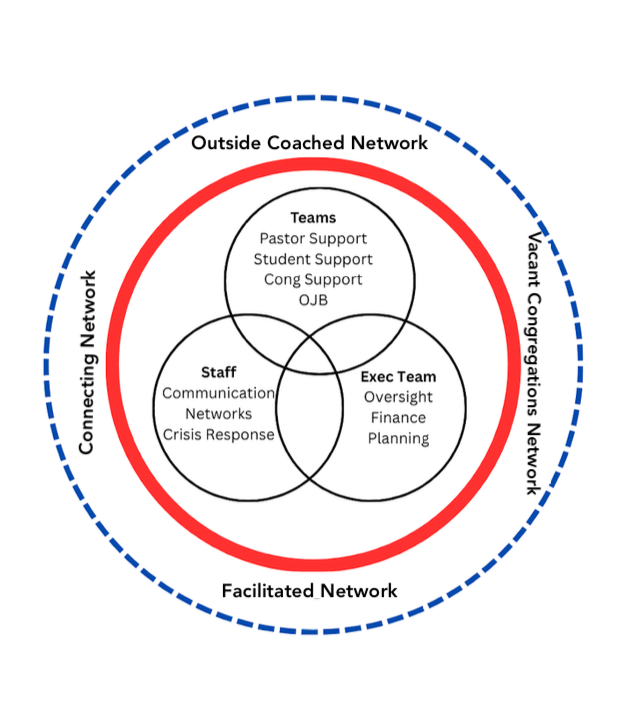
The core support of this Middle Assembly (MAMA) is the three-fold and connected Executive Team, Ministry Support Teams, and Staff. These three entities are empowered to do the work of MAMA between annual Family Reunions and exist to support the mission and vision.
Executive Team
(6 elected members – elders or pastors, meeting quarterly)
Led by an elected President and is tasked with the oversight of the MAMA, including staff, finance, vision, and the networks. Meeting quarterly (more if needed), this body empowers the teams and the staff to do their work and provides a layer of accountability and communication.
Ministry Support Teams
(4 teams – elders or pastors, with set meetings, responsibilities, terms of service, and clear communication paths)
Pastoral Support: Touchpoint for all pastors, providing regular connection and inviting both support and accountability; prayerfully supporting pastors as well as their families.
Student Support: Oversees all candidates under care and provides practical support and accountability, including navigation of the process, student exams, and ensuring that all candidates are connected to a network of support.
Congregational Support: Support for congregations in transition, crisis, or times of uncertainty. Keeps clear records of resources and supports available for congregations, particularly focused on but not limited to vacant pulpits.
OJB: Standing committee to oversee Overtures and Judicial Business.
Staff
Administrative (Clerk/Treasurer): 10 hours a week. This individual will fulfill the mandated role of the Clerk in the BCO as well as supporting the work of the rest of the Core. Communication and coordination will be key pieces of this work. This individual will also be responsible for the day-to-day finances of MAMA and report monthly to the Executive Team.
Coordinator/ /Executive Leader: 20 hours a week, salaried position. This individual will be the day-to-day touch point for congregations, pastors, and committees. Working in partnership with the Ministry Support Teams, this individual will have primary oversight and coordination of the Networks that bind us together. Communication will be a key responsibility for this position.
Types of Network
Outside Coached Network: Coached with intentional monthly meetings around deeper and shared learning. These networks are led by leaders who are clear on direction and goals and are looking for accountability and learning support.
Vacant Congregations Network: Staff-facilitated and focused on congregations without a current serving pastor or who are in a transition process. Meeting quarterly as a group with one or two elders from the congregation serving as a part of the network.
Connecting Network: Staff-facilitated and serves primarily as a check-in or space to share the challenges of ministry. These networks will meet quarterly and provide opportunities for ministers to connect with one another and to discern next steps for their ministry.
Facilitated Network: Facilitated and will provide support for new leaders, leaders in a new call, leaders discerning goals or direction, students, and others who are clarifying their call and are not yet as clear. Meeting 6-8 times a year, these networks will be spaces of both learning and connection.